▶ Teresia Teaiwa - Kiribati - YouTube: "Teresia Teaiwa - Kiribati"
'via Blog this'
Friday, August 30, 2013

▶ Part 1: Sustainability and Underdevelopment: Complex Trade-offs on the Tibetan Plateau, Katherine Morton - YouTube
▶ Part 1: Sustainability and Underdevelopment: Complex Trade-offs on the Tibetan Plateau, Katherine Morton - YouTube: "Part 1: Sustainability and Underdevelopment: Complex Trade-offs on the Tibetan Plateau, Katherine Morton"
An uncertain future on the Plateau | Katherine Morton - China Dialogue
An uncertain future on the Plateau | Katherine Morton - China Dialogue: "Glacial melt poses critical risks to biodiversity, people and livelihoods on the Tibetan Plateau. Katherine Morton explores the possibilities for an effective regional response.
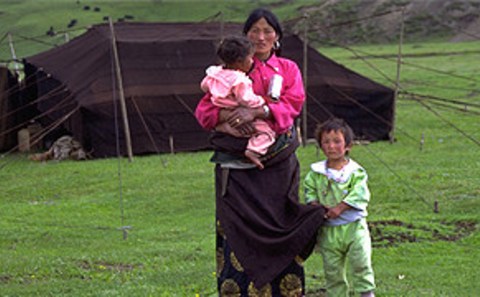
Global climate change is one of the biggest challenges facing humankind in the twenty-first century. It is occurring at a time when China’s economic rise is leading to substantial environmental problems, combined with escalating demands on global resources. Many commentators have warned of impending economic collapse, rising social conflicts and large-scale public health disasters. "
'via Blog this'
Global climate change is one of the biggest challenges facing humankind in the twenty-first century. It is occurring at a time when China’s economic rise is leading to substantial environmental problems, combined with escalating demands on global resources. Many commentators have warned of impending economic collapse, rising social conflicts and large-scale public health disasters. "
'via Blog this'
Invisible Tibet ~ Woeser: New York Times: Dutch photographer in the eyes of upheaval in Tibet
Invisible Tibet ~ Woeser: New York Times: Dutch photographer in the eyes of upheaval in Tibet: " Tibetan religious leader the Dalai Lama and former ruler (Dalai Lama) is accused China Tibetan culture stifled. The Chinese government encourages Han Chinese to migrate to the disputed region, this nomadic and agricultural Buddhist culture dominated society into a more modern but less distinctive Tibetan society. Wald from the Netherlands, said the pace of development is so fast that it took time change in Europe for hundreds of years in just 10 years swept across Tibet. "Sometimes it is very sad, because of the beautiful things will disappear, sometimes they are very good things," she said. "Tibet has been changing every time I come back, just like back in different centuries.""
'via Blog this'

'via Blog this'
Kora (Full Circle) - Where Tibetans Write
Kora (Full Circle) - Where Tibetans Write: "KORA
SEMSHOOK (format .pdf, click to download)
"
'via Blog this'

SEMSHOOK (format .pdf, click to download)
"
'via Blog this'

Freedom Shower - Where Tibetans Write
Freedom Shower - Where Tibetans Write: "Freedom Shower
Thursday 9 March 2006, by Bhuchung D Sonam
Tomorrow & Other Poems By Lhasang Tsering Publisher: Rupa & Co. Price: Rs.195/
The issue of Tibet is a remnant of the Great Game. Only now the playing fields are a tiny town in northern India and the Great Hall of People via Hong Kong. For the past decade or so the Tibetan issue has taken unfathomable twists and turns, from Independence to one country with two systems, from genuine autonomy to association with China. After forty years, we are at our wits end, having tried everything, it seems, except to stick to the struggle for independence – which is rightly ours and wrongly snatched from us."

'via Blog this'
Thursday 9 March 2006, by Bhuchung D Sonam
Tomorrow & Other Poems By Lhasang Tsering Publisher: Rupa & Co. Price: Rs.195/
The issue of Tibet is a remnant of the Great Game. Only now the playing fields are a tiny town in northern India and the Great Hall of People via Hong Kong. For the past decade or so the Tibetan issue has taken unfathomable twists and turns, from Independence to one country with two systems, from genuine autonomy to association with China. After forty years, we are at our wits end, having tried everything, it seems, except to stick to the struggle for independence – which is rightly ours and wrongly snatched from us."

'via Blog this'
▶ Tibet's Cry For Freedom ◦ Full Movie - YouTube
▶ Tibet's Cry For Freedom ◦ Full Movie - YouTube: "Tibet's Cry For Freedom ◦ Full Movie"
'via Blog this'
'via Blog this'
China: End Involuntary Rehousing, Relocation of Tibetans | Human Rights Watch
China: End Involuntary Rehousing, Relocation of Tibetans | Human Rights Watch: "New York) – The Chinese government is subjecting millions of Tibetans to a policy of mass rehousing and relocation that radically changes their way of life, and about which they have no say, Human Rights Watch said in a new report published today.
Since 2006, under plans to “Build a New Socialist Countryside” in Tibetan areas, over two million Tibetans have been “rehoused” – through government-ordered renovation or construction of new houses – in the Tibet Autonomous Region (TAR), while hundreds of thousands of nomadic herders in the eastern part of the Tibetan plateau have been relocated or settled in “New Socialist Villages.”"
'via Blog this'
Since 2006, under plans to “Build a New Socialist Countryside” in Tibetan areas, over two million Tibetans have been “rehoused” – through government-ordered renovation or construction of new houses – in the Tibet Autonomous Region (TAR), while hundreds of thousands of nomadic herders in the eastern part of the Tibetan plateau have been relocated or settled in “New Socialist Villages.”"
'via Blog this'
▶ beautiful children's book: Where Snow Leopard Prowls, Wild Animals of Tibet - YouTube
Thus beautiful children's book: Where Snow Leopard Prowls, Wild Animals of Tibet - YouTube: "Published on Nov 7, 2012
This gorgeous book can become real! Go to Naomi Rose's Kickstarter campaign and help fund the printing of her wonderful book designed to engage children with the natural world, to delight in the amazing wildlife of the Tibetan Plateau.
This gorgeous book can become real! Go to Naomi Rose's Kickstarter campaign and help fund the printing of her wonderful book designed to engage children with the natural world, to delight in the amazing wildlife of the Tibetan Plateau.
Plateau Photos ‹ Marc Foggin Photography

Plateau Photos ‹ Marc Foggin Photography
Mountains of Concrete: Dam Building in the Himalayas | International Rivers
Mountains of Concrete: Dam Building in the Himalayas | International Rivers: "Mountains of Concrete: Dam Building in the Himalayas
There will always be abundant snow and glaciers on the highest mountains of the world, the Himalayas. This snow will always feed the Indus and Ganges rivers and forever supply water to millions of people in South Asia and China.
These statements may no longer be true. Our warming climate is changing the Himalayas faster than any other region of the world. The mountains’ mighty glaciers, the source of most large Asian rivers, are melting.
"

'via Blog this'
There will always be abundant snow and glaciers on the highest mountains of the world, the Himalayas. This snow will always feed the Indus and Ganges rivers and forever supply water to millions of people in South Asia and China.
These statements may no longer be true. Our warming climate is changing the Himalayas faster than any other region of the world. The mountains’ mighty glaciers, the source of most large Asian rivers, are melting.
"

'via Blog this'
▶ Mountains of Concrete - YouTube
▶ Mountains of Concrete - YouTube: "Mountains of Concrete
Ann-Kathrin Schneider of International Rivers discusses the new report "Mountains of Concrete" outlining the future of dam-construction and their impact on climate change. "
'via Blog this'
Ann-Kathrin Schneider of International Rivers discusses the new report "Mountains of Concrete" outlining the future of dam-construction and their impact on climate change. "
'via Blog this'
Exploring the third pole | The Third Pole
Exploring the third pole | The Third Pole: "The special thethirdpole.net reader presents highlights from our published articles by
journalists and experts from Tibet to Bangladesh. Important articles are classified by theme and this reader is free to download.
Download the complete series"
'via Blog this'

journalists and experts from Tibet to Bangladesh. Important articles are classified by theme and this reader is free to download.
Download the complete series"
'via Blog this'

Community radio helps farmers in India make sense of climate science | The Third Pole
Community radio helps farmers in India make sense of climate science | The Third Pole: "Community radio helps farmers in India make sense of climate science
thethirdpole.net has been part of a pioneering new project to train local radio broadcasters to understand and report on climate change.
The Bundelkhand region of Madhya Pradesh state in central India is one of India’s poorest and most arid regions; it has experienced nine severe droughts our of the last 15 years"
'via Blog this'

thethirdpole.net has been part of a pioneering new project to train local radio broadcasters to understand and report on climate change.
The Bundelkhand region of Madhya Pradesh state in central India is one of India’s poorest and most arid regions; it has experienced nine severe droughts our of the last 15 years"
'via Blog this'

Love story of the black-necked crane: climate change and the relationship between people and nature on the Qinghai-Tibetan plateau
Love story of the black-necked crane: climate change and the relationship between people and nature on the Qinghai-Tibetan plateau: "With this tale of loss, narrated through a series of drawings, Tashi Sange explores people’s relationship with nature in the shifting climate of China’s far western plateau."
'via Blog this'
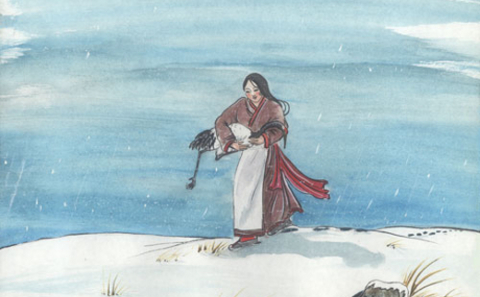
'via Blog this'
A Buddhist Monk Saves One of the World's Rarest Birds | Science & Nature | Smithsonian Magazine
A Buddhist Monk Saves One of the World's Rarest Birds | Science & Nature | Smithsonian Magazine: "“Rrrrrr, Badgers!” Tashi Zangpo says, cradling the remains of a bird nest in his hands on a mountain slope nearly 14,000 feet above sea level. For weeks, Tashi, a Tibetan Buddhist monk and self-taught conservation biologist, has scoured these mountains in China’s Qinghai province for nests of the Tibetan bunting. Now that he’s found one, he’s discovered that a badger has beaten him to it and devoured the young."
'via Blog this'

'via Blog this'

The Bird Whisperer Video | Smithsonian Magazine
The Bird Whisperer Video | Smithsonian Magazine: "The Bird Whisperer
From the Qinghai Privince in China, Buddhist monk Tashi Sange studies one of the world's rarest birds, the Tibetan bunting. (3:12)"
'via Blog this'
From the Qinghai Privince in China, Buddhist monk Tashi Sange studies one of the world's rarest birds, the Tibetan bunting. (3:12)"
'via Blog this'
The birdwatching lama of Qinghai: Tashi Sange and Buddhist conservation | chinadialogue
The birdwatching lama of Qinghai: Tashi Sange and Buddhist conservation | chinadialogue: "ashi Sange, a Qinghai-based lama, has become a local legend for his love, observation, painting and protection of birdlife. Geng Dong, media consultant at the Shan Shui Conservation Center, spent weeks getting to know him and, with this profile, won the “best profile” category at the 2011 China Environmental Press Awards."
'via Blog this'

'via Blog this'
Saturday, August 24, 2013
Tibetan Plateau - National Geographic Magazine
Tibetan Plateau - National Geographic Magazine: "Glaciers in the high heart of Asia feed its greatest rivers, lifelines for two billion people. Now the ice and snow are diminishing."
'via Blog this'

'via Blog this'

Friday, August 23, 2013
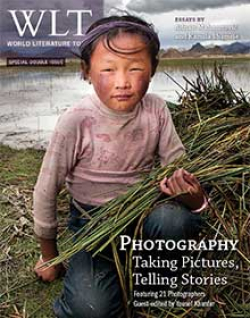
Poetrymind: Dhondup Gyal: Tibet's First Modern Poet
Poetrymind: Dhondup Gyal: Tibet's First Modern Poet: "Dhondup Gyal is considered the first modern Tibetan poet breaking through traditional Tibetan formalist elements. On the page, his verse appears almost projective. He began publishing in the 1980''s. Sad to say, he committed suicide in 1985. The two works published before his death are-"Dawn Pillow Writing" ('bol-rtsom zhogs-pa'i skya-rengs) and "History and Specificity of the Tibetan Tradition of Narrative Song" (mgyur-glu'i lo-rgyus dang kyed-chos). Note: I'm really interested in his scholarly work --if anyone knows how to get a copy in Tibetan or is working on the English, please contact me. Probably more recent publications such as Amnye Machen Institute's are available in Tibetan as well as Chinese editions. His most famous poem is "The Torrents or Youth" or, as in this case, "The Waterfall of Youth" published in English in "New Writing from Tibet; Song of the Snow Lion" edited by Frank Stewart-part of "Manoa's" series from Asia, Oceania, and the Americas. I’ve printed it here as is."
'via Blog this'

'via Blog this'
Rivers of Ice » Comparative Photography
Rivers of Ice » Comparative Photography: "Comparative Photography
The Main Rongbuk Glacier, Mount Everest
http://asiasociety.org/onthinnerice
"
'via Blog this'
The Main Rongbuk Glacier, Mount Everest
http://asiasociety.org/onthinnerice
"
'via Blog this'
TOP SEVEN ENVIRONMENTAL CHALLENGES IN TIBET: 2 of 3 | Rukor
TOP SEVEN ENVIRONMENTAL CHALLENGES IN TIBET: 2 of 3 | Rukor: "GLOBAL CLIMATE CHANGE
Problem: The land of snows, surrounded by mountains, is melting, drying and heating fast. Only the Arctic and Antarctic are warming quicker. Much of the plateau soil is in a region of permafrost, which holds frozen water in cold months, which then melts in warmer months. Not only does the seasonal thawing and freezing make is difficult to build railways and highways, as ice expands and contracts, but the early melt in spring, before plant roots can reach down to the icemelt, means plants wither, and wetlands dry up in April, May and June, lacking the water they need before the monsoon rains come. The death of Tibetan wetlands is now major, even desertification of many areas in Amdo. This is well documented in scientific research reports. There are many wetlands in Tibet, home to migratory waterbirds, now disappearing, and releasing to the atmosphere the carbon they had long stored. The new trend of early spring is also hard for farmers, whose crops find no water near the surface."
'via Blog this'
Problem: The land of snows, surrounded by mountains, is melting, drying and heating fast. Only the Arctic and Antarctic are warming quicker. Much of the plateau soil is in a region of permafrost, which holds frozen water in cold months, which then melts in warmer months. Not only does the seasonal thawing and freezing make is difficult to build railways and highways, as ice expands and contracts, but the early melt in spring, before plant roots can reach down to the icemelt, means plants wither, and wetlands dry up in April, May and June, lacking the water they need before the monsoon rains come. The death of Tibetan wetlands is now major, even desertification of many areas in Amdo. This is well documented in scientific research reports. There are many wetlands in Tibet, home to migratory waterbirds, now disappearing, and releasing to the atmosphere the carbon they had long stored. The new trend of early spring is also hard for farmers, whose crops find no water near the surface."
'via Blog this'
MOTHER OF ALL ASIAN RIVERS, WATER TOWER OF ASIA | Rukor
MOTHER OF ALL ASIAN RIVERS, WATER TOWER OF ASIA | Rukor: "ABSTRACT: Potent new metaphors are forming in the ice above India: the third pole, the water tower of Asia, the engine of the monsoon, mother of all rivers of Asia. Like the classic metaphors of Gangotri and Kailash, realms of gods guaranteeing the icy purity of the waters of India, they conjure an image of Tibet as the protector of the whole of Asia, from the mouth of the Indus in Pakistan to the mouth of the Yellow River below Beijing."
'via Blog this'
'via Blog this'
Thursday, August 22, 2013
IMAGES FROM TIBET - www.frittibet.dk
IMAGES FROM TIBET - www.frittibet.dk: "The images come from a trip to Amdo and Kham in eastern Tibet, as Anne-Mette Kruse and Charlotte Mathiassen conducted in the summer of 2007. The trip was funded by Danida. Billedserien below illustration for a lecture on Tibet. Interested parties may use both text and images to tell about Tibet or you can ask us to ask for a lecture.
Retrieve the text to the images at: http://www.scribd.com/doc/3194795/Billedforedrag-tekst"
'via Blog this'

Retrieve the text to the images at: http://www.scribd.com/doc/3194795/Billedforedrag-tekst"
'via Blog this'

Short Film - about the film | Meltdown in Tibet
Short Film - about the film | Meltdown in Tibet: "meltdown in tibet
short film, disturbing questions
a personal take on the politics of water in Tibet
A film by Michael Buckley
Using undercover footage and stills, Meltdown in Tibet blows the lid off China's huge and potentially catastrophic dam-building projects in Tibet. The mighty rivers sourced in Tibet are lifelines to the people of India and Southeast Asia. These rivers are at great risk from rapidly receding glaciers—a meltdown accelerated by climate change—and from large-scale damming and diversion, due to massive Chinese engineering projects. To make way for these hydropower projects and for mining ventures, Tibetan nomads are being forced off their traditional grassland habitat—and resettled in bleak villages, where they cannot make a decent living."
meltdown in tibet
short film, disturbing questions
a personal take on the politics of water in Tibet
A film by Michael Buckley
Using undercover footage and stills, Meltdown in Tibet blows the lid off China's huge and potentially catastrophic dam-building projects in Tibet. The mighty rivers sourced in Tibet are lifelines to the people of India and Southeast Asia. These rivers are at great risk from rapidly receding glaciers—a meltdown accelerated by climate change—and from large-scale damming and diversion, due to massive Chinese engineering projects. To make way for these hydropower projects and for mining ventures, Tibetan nomads are being forced off their traditional grassland habitat—and resettled in bleak villages, where they cannot make a decent living.
'via Blog this'
short film, disturbing questions
a personal take on the politics of water in Tibet
A film by Michael Buckley
Using undercover footage and stills, Meltdown in Tibet blows the lid off China's huge and potentially catastrophic dam-building projects in Tibet. The mighty rivers sourced in Tibet are lifelines to the people of India and Southeast Asia. These rivers are at great risk from rapidly receding glaciers—a meltdown accelerated by climate change—and from large-scale damming and diversion, due to massive Chinese engineering projects. To make way for these hydropower projects and for mining ventures, Tibetan nomads are being forced off their traditional grassland habitat—and resettled in bleak villages, where they cannot make a decent living."
meltdown in tibet
short film, disturbing questions
a personal take on the politics of water in Tibet
A film by Michael Buckley
Using undercover footage and stills, Meltdown in Tibet blows the lid off China's huge and potentially catastrophic dam-building projects in Tibet. The mighty rivers sourced in Tibet are lifelines to the people of India and Southeast Asia. These rivers are at great risk from rapidly receding glaciers—a meltdown accelerated by climate change—and from large-scale damming and diversion, due to massive Chinese engineering projects. To make way for these hydropower projects and for mining ventures, Tibetan nomads are being forced off their traditional grassland habitat—and resettled in bleak villages, where they cannot make a decent living.
'via Blog this'
Wednesday, August 21, 2013
China Green | Asia Society - Tibetan Plateau
China Green | Asia Society - Tibetan Plateau: "Coal + Ice is a documentary photography exhibition featuring the work of 30 photographers from China, the United States, Canada, Malaysia, Russia, Hungary, Poland, Norway, Italy, Germany and the United Kingdom, whose work, brought together here, visually narrates the hidden chain of actions triggered by mankind’s use of coal.
This photographic arc moves from deep within the coal mines to the glaciers of the greater Himalaya where greenhouse gasses are warming the high altitude climate. As these mighty glaciers melt at an accelerated pace, the great rivers of Asia that flow from the Tibetan Plateau into the oceans are disturbed, and the lives of billions of people downstream are disrupted."
'via Blog this'
This photographic arc moves from deep within the coal mines to the glaciers of the greater Himalaya where greenhouse gasses are warming the high altitude climate. As these mighty glaciers melt at an accelerated pace, the great rivers of Asia that flow from the Tibetan Plateau into the oceans are disturbed, and the lives of billions of people downstream are disrupted."
'via Blog this'
Choke Point: China | Wilson Center
Choke Point: China | Wilson Center: "The burgeoning confrontation between energy and water creates a choke point that poses fundamental global challenges. Underlying China’s advance to international economic prominence, like a tectonic fault line, lies an increasingly fierce competition for water. According to Chinese authorities and government reports, China’s massive economic growth is outpacing its freshwater supply. Water scarcity limits energy development, and the growing demand for nuclear energy, biofuels, and natural gas is straining fresh water supplies. "
'via Blog this'
'via Blog this'
Wednesday, August 14, 2013
Climate Change on Tibet Plateau Detrimental for Asia’s Future
Climate Change on Tibet Plateau Detrimental for Asia’s Future: "Climate Change on Tibet Plateau Detrimental for Asia’s Future
Thursday, 06 January 2011 13:48 YC. Dhardhowa, The Tibet Post International
Dharamshala: A new book covering Tibet's water and related environmental issues linked to climate change and Tibet was released by Tibetan Women's Group based in Dharamshala on Thursday (6 January). The group said in a statement that a music video titled ‘Achi Drokmo'- features a nomadic woman singing in solitude and grieving over her lost home and herds, was also launched on the same day."
'via Blog this'

Thursday, 06 January 2011 13:48 YC. Dhardhowa, The Tibet Post International
Dharamshala: A new book covering Tibet's water and related environmental issues linked to climate change and Tibet was released by Tibetan Women's Group based in Dharamshala on Thursday (6 January). The group said in a statement that a music video titled ‘Achi Drokmo'- features a nomadic woman singing in solitude and grieving over her lost home and herds, was also launched on the same day."
'via Blog this'

From Inner Mongolia to Tibet, Sustainability in China: Ada Liu at TEDxSugarLand - YouTube
From Inner Mongolia to Tibet, Sustainability in China: Ada Liu at TEDxSugarLand - YouTube: "From Inner Mongolia to Tibet, Sustainability in China: Ada Liu at T"
'via Blog this'
'via Blog this'
Slideshow: "Across the Tibetan Plateau" | FutureGenerations/CHINA - China Dialogue
Slideshow: "Across the Tibetan Plateau" | FutureGenerations/CHINA - China Dialogue: "Slideshow: "Across the Tibetan Plateau"
FutureGenerations/CHINA
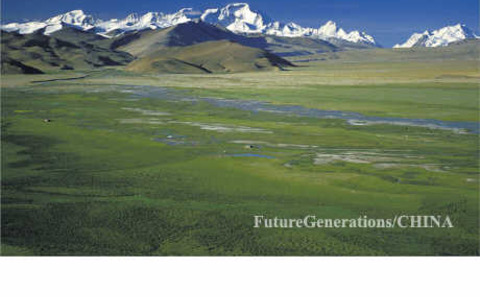
Tibet’s ecosystems, wildlife and conservation efforts are significant for environmental protection worldwide. Robert L Fleming, Dorje Tsering and Liu Wulin depict the region’s ecological wonders."
'via Blog this'
FutureGenerations/CHINA
Tibet’s ecosystems, wildlife and conservation efforts are significant for environmental protection worldwide. Robert L Fleming, Dorje Tsering and Liu Wulin depict the region’s ecological wonders."
'via Blog this'
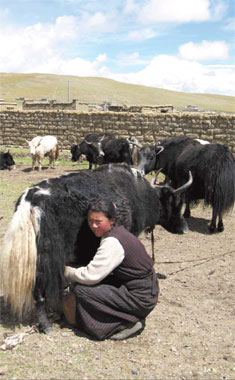
Tibet moving on climate change threat
Tibet moving on climate change threat: "For Tibetan yak herder Bugye, the grassland in Nagqu prefecture, Lhoma county is much greener this year.
"The animals have more fresh grass, especially this summer," Bugye, 68, said, watching over his herd of 70 yaks and 200 sheep grazing under blue sky and bright sunshine this early autumn"
'via Blog this'

"The animals have more fresh grass, especially this summer," Bugye, 68, said, watching over his herd of 70 yaks and 200 sheep grazing under blue sky and bright sunshine this early autumn"
'via Blog this'
In Tibet, Change Comes to the Once-Pristine Roof of the World: e360 Gallery
In Tibet, Change Comes to the Once-Pristine Roof of the World: e360 Gallery: "In Tibet, Change Comes to the Once-Pristine Roof of the World
Renowned biologist George Schaller has been traveling to the remote Tibetan Plateau for nearly three decades, studying its unique wildlife. But with climate change and overgrazing taking a toll on the landscape, he reports, scientists and the Chinese government are working to preserve one of the planet’s wildest places. READ MORE "
'via Blog this'
Renowned biologist George Schaller has been traveling to the remote Tibetan Plateau for nearly three decades, studying its unique wildlife. But with climate change and overgrazing taking a toll on the landscape, he reports, scientists and the Chinese government are working to preserve one of the planet’s wildest places. READ MORE "
'via Blog this'
In Tibet, Change Comes to the Once-Pristine Roof of the World: e360 Gallery
In Tibet, Change Comes to the Once-Pristine Roof of the World: e360 Gallery: "In Tibet, Change Comes to the Once-Pristine Roof of the World
Renowned biologist George Schaller has been traveling to the remote Tibetan Plateau for nearly three decades, studying its unique wildlife. But with climate change and overgrazing taking a toll on the landscape, he reports, scientists and the Chinese government are working to preserve one of the planet’s wildest places. READ MORE "
'via Blog this'
Renowned biologist George Schaller has been traveling to the remote Tibetan Plateau for nearly three decades, studying its unique wildlife. But with climate change and overgrazing taking a toll on the landscape, he reports, scientists and the Chinese government are working to preserve one of the planet’s wildest places. READ MORE "
'via Blog this'
Friday, August 9, 2013
Meltdown: Photographing Climate Change on the Tibetan Plateau on Vimeo
Meltdown: Photographing Climate Change on the Tibetan Plateau on Vimeo: "Photojournalist Sean Gallagher (gallagher-photo.com) discusses his recent work on the Tibetan Plateau. He shares his thoughts on how he conceptualized his project, its evolution and how he executed it in the field, discussing some of the challenges he faced. His project, "Meltdown: Climate Change and Environmental Degradation on the Tibetan Plateau," looks at issues such as melting glaciers, grassland degradation, desertification, mining and the disappearance of Tibetan culture."
'via Blog this'
'via Blog this'
Meltdown: Photographing Climate Change on the Tibetan Plateau from Sean Gallagher on Vimeo.
The Tibetan Plateau Blog: About
The Tibetan Plateau Blog: About: "The Tibetan Plateau blog shares news, information and perspectives on Tibet's environment and development issues.
This blog is maintained by Tashi Tsering, a proud member of Tesi Environmental Awareness Movement (TEAM) and a Ph.D. Candidate in Resource Management and Environmental Studies at the University of British Columbia. "
'via Blog this'
This blog is maintained by Tashi Tsering, a proud member of Tesi Environmental Awareness Movement (TEAM) and a Ph.D. Candidate in Resource Management and Environmental Studies at the University of British Columbia. "
'via Blog this'

Saturday, August 3, 2013
ISSUU - onsite 21: weather by stephanie white
ISSUU - onsite 21: weather by stephanie white: "onsite 21: weather
architecture and weather, from vernacular traditions, to sustainable technology."
'via Blog this'
architecture and weather, from vernacular traditions, to sustainable technology."
'via Blog this'
The Mekong: A River And A Region Transformed : NPR
The Mekong: A River And A Region Transformed : NPR: "Mekong Interactive
On a 3,000-mile journey from the river’s source on the Tibetan plateau to its mouth at the South China Sea, NPR’s Michael Sullivan and photographer Christopher Brown examine the turbulent history and uncertain future along the Mekong."
'via Blog this'
On a 3,000-mile journey from the river’s source on the Tibetan plateau to its mouth at the South China Sea, NPR’s Michael Sullivan and photographer Christopher Brown examine the turbulent history and uncertain future along the Mekong."
'via Blog this'
▶ Mekong, the river of nine dragons (full documentary) - YouTube
▶ Mekong, the river of nine dragons (full documentary) - YouTube: "Published on Jul 16, 2013
The Mekong is one of the great rivers of the world. Born at 5000 meters altitude in the Tibetan Plateau and after crossing China, Burma, Thailand, enters in Laos and Cambodia to die in the China Sea, South of Vietnam.
Laos, Cambodia and southern Vietnam are the site where develops this episode, which aims to show the reality of these three countries and how the Mekong River is central to the life of its people.
Anam mountains, in Laos, welcoming Ekor Tribe. Until then the cameras have moved the program to capture the new year celebration, its leisurely way of life and respect for the environment in their daily work."
'via Blog this'
The Mekong is one of the great rivers of the world. Born at 5000 meters altitude in the Tibetan Plateau and after crossing China, Burma, Thailand, enters in Laos and Cambodia to die in the China Sea, South of Vietnam.
Laos, Cambodia and southern Vietnam are the site where develops this episode, which aims to show the reality of these three countries and how the Mekong River is central to the life of its people.
Anam mountains, in Laos, welcoming Ekor Tribe. Until then the cameras have moved the program to capture the new year celebration, its leisurely way of life and respect for the environment in their daily work."
'via Blog this'
Power of Place - 13 Overview
Power of Place - 13 Overview: "This video program features two case studies on mainland Southeast Asia: Laos: Isolated Heart and Vietnam: Fertile Dreams.
Laos and Vietnam are countries attempting to open their borders to the world after years of isolation due to civil war, political unrest, and physical geographic barriers.
The first case study, Laos: Isolated Heart, shows how physical geographic barriers such as the Mekong River and the mountains that cover seventy percent of this traditionally poor country have led to years of isolation for Laos. Political unrest and military conflict in Southeast Asia during the latter half of the twentieth century has also limited access. Landlocked by five other countries, Laos has no sea access and must rely on ground and air travel to interact with other countries."
'via Blog this'
Laos and Vietnam are countries attempting to open their borders to the world after years of isolation due to civil war, political unrest, and physical geographic barriers.
The first case study, Laos: Isolated Heart, shows how physical geographic barriers such as the Mekong River and the mountains that cover seventy percent of this traditionally poor country have led to years of isolation for Laos. Political unrest and military conflict in Southeast Asia during the latter half of the twentieth century has also limited access. Landlocked by five other countries, Laos has no sea access and must rely on ground and air travel to interact with other countries."
'via Blog this'
Friday, August 2, 2013
The Mekong - Grounds of Plenty | Watch Documentaries Online | Promote Documentary Film
The Mekong - Grounds of Plenty | Watch Documentaries Online | Promote Documentary Film: " The story of how fish from the Mekong River are caught and sold, cooked and consumed, by the people of the Mekong region. The rich wild capture fisheries of the Mekong River and its ecosystems feed and support not only people living alongside the river, but are crucial for the livelihoods of millions of people across mainland Southeast Asia who trade, sell and cook them. Caught using an array of nets, baskets and traps, cooked in many amazing ways, the Mekong River’s wild fish catch is central to the region’s food security. Through the stories of the people themselves, the film shows the journey of the wild capture fish from fisher to trader to cook to consumer - its passage through networks of trade as people work through the night and day to transport the catch to villages and towns, to markets, homes and restaurants."
'via Blog this'
'via Blog this'
Southeast Asia - Google Maps
View Southeast Asia in a larger mapSoutheast Asia - Google Maps: "
View Southeast Asia in a larger map"
'via Blog this'
Subscribe to:
Comments (Atom)